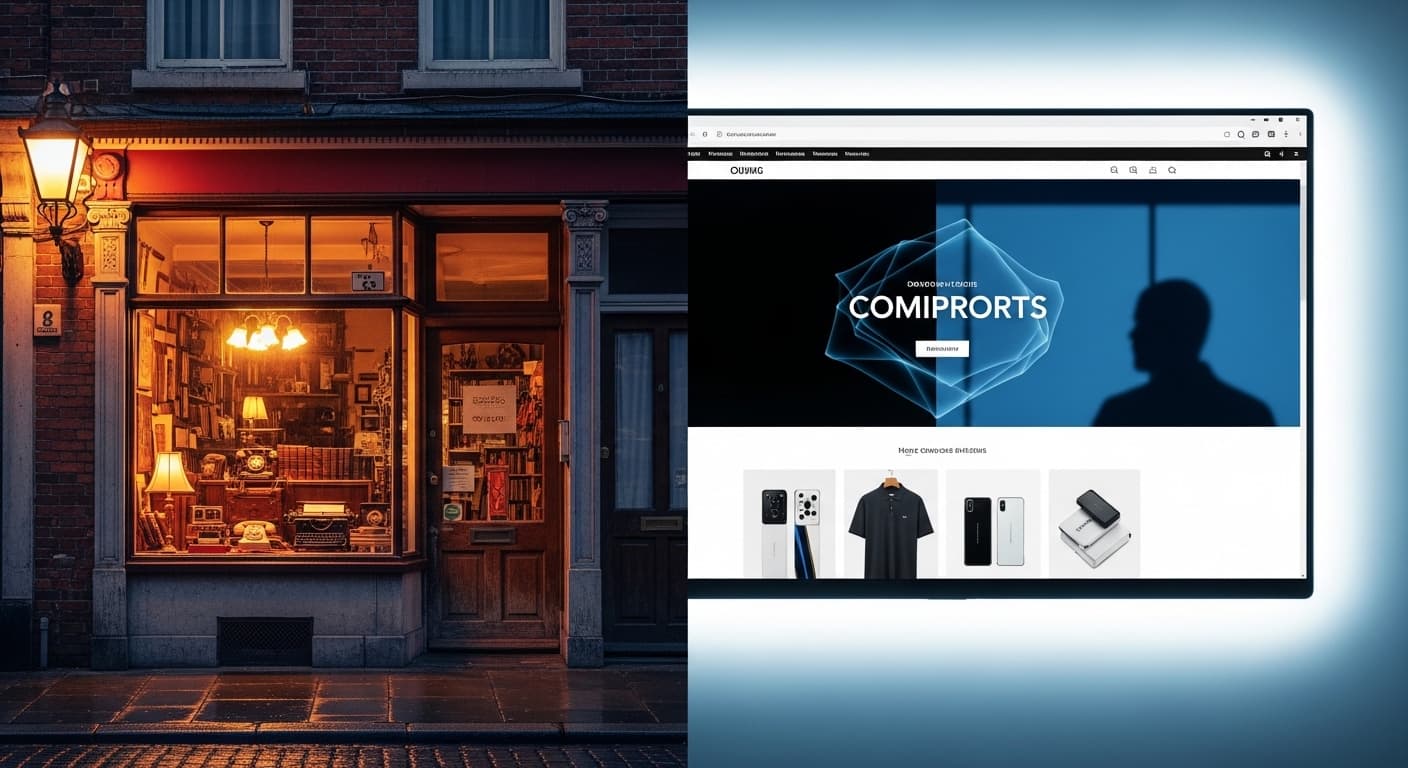
The shift from physical to digital commerce isn't a trend — it's a permanent transformation of how buying and selling works. Understanding it is the first step to winning in the new landscape.
Twenty-five years ago, retail meant physical stores. Your market was defined by how far a customer was willing to drive. Your competition was whoever happened to be in the same mall or on the same street. Your hours were set by when you could afford to keep staff on the clock. All of that changed permanently when e-commerce matured from a novelty into the dominant channel for commerce.
The Power Shifted to the Buyer
Before e-commerce, sellers held most of the power in any transaction. Customers had limited options, limited information, and limited ability to compare. E-commerce reversed this entirely. Today's buyer can compare dozens of sellers in minutes, read thousands of reviews, find the exact product specification they need, and switch to a competitor in three clicks if they don't like what they see. Businesses that haven't adapted to this buyer-empowered reality are operating by rules that no longer apply.
Speed Became the New Standard
Amazon Prime conditioned consumers to expect two-day delivery as a baseline. Many customers now expect same-day options for local orders. This raised the bar for all e-commerce players, but it also created enormous opportunity: businesses that can meet or beat these expectations differentiate themselves sharply from competitors who haven't optimized their fulfillment. Speed is no longer a premium feature — it's table stakes.
Data Became the Competitive Moat
Physical retail generates limited data about customer behavior. E-commerce generates an extraordinary amount: which products customers viewed but didn't buy, which pages caused them to leave, what search terms brought them to your store, how often they return. This data allows businesses to make decisions that physical retailers simply can't — optimizing product placement, personalizing recommendations, and targeting marketing with precision that would have been impossible in the pre-digital era.
The Businesses That Adapted Won
The e-commerce transformation created clear winners and losers. Businesses that embraced the shift early built data assets, customer relationships, and operational efficiencies that compound year over year. Those that resisted or delayed found themselves increasingly marginalized as consumer habits solidified around digital-first purchasing. The transformation isn't coming — it already happened. The only question for any business today is how to position within the new landscape.
Ready to put this into practice?
We help small businesses build the kind of online presence that generates real results.
Start a Project →